Acts 8
To Judea & Samaria
The first part of the chapter introduces Saul (later, Paul). He is leading a group which is harassing the early church. The sensible suggestion that Gamaliel said (Acts 7) is thrown to wind, and the persecutions have begun. God may have allowed the persecution to push the church to an evangelistic mode and to aid in the spread of the faith. That may have helped them become 'Gossipers of the gospel'. It is said that the blood of the martyrs is the seed of the church.
Next we see how Philip is sent to Samaria. When Solomon died, Israel was divided into the northern kingdom with Samaria as the capital and the southern kingdom of Judah with Jerusalem as the capital. The Assyrians captured the North and by their strategy of dominance uprooted the jews in that part to go all over the entire Assyrian nation as slaves. They also permitted a lot of migration, thereby soon diluting the jewish blood. The Jewish kingdom of Judah however was attacked by Babylon. But under Nehemiah's leadership, jews returned to their nation to rebuild the temple. Jews in the south believed themselves to be pure and despised the North. The northern kingdom was skeptical of the south as well. All of these contributed to the jews considering the Samaritans as the scum of the earth and also led to terrible animosity towards the jews of the south from the samaritans. Hence, the parable of the good samaritan being narrated by Jesus to the jews is such a radical step.
Philip going to Samaria was also such a radical move. Over there, he delivers the gospel and they believe and get baptized. But we can see that they received the Holy Spirit after much delay (only when Peter and John were sent to them). Why so? Is this the natural order? Read this Piper commentary to understand the various theories.
http://www.desiringgod.org/sermons/what-does-it-mean-to-receive-the-holy-spirit
"Many interpreters would say that even if the Samaritans were already true believers and the Holy Spirit was given in two stages, this was not meant to be normative for all Christians. Instead it was an exceptional pattern so that (for example) the Jewish apostles would come down to Samaria and signify by their laying on of hands that there is oneness between the Samaritan and Jewish church in spite of age old hostilities between Jews and Samaritans." God is healing the rift between these two communities.
To Judea & Samaria
The first part of the chapter introduces Saul (later, Paul). He is leading a group which is harassing the early church. The sensible suggestion that Gamaliel said (Acts 7) is thrown to wind, and the persecutions have begun. God may have allowed the persecution to push the church to an evangelistic mode and to aid in the spread of the faith. That may have helped them become 'Gossipers of the gospel'. It is said that the blood of the martyrs is the seed of the church.
Next we see how Philip is sent to Samaria. When Solomon died, Israel was divided into the northern kingdom with Samaria as the capital and the southern kingdom of Judah with Jerusalem as the capital. The Assyrians captured the North and by their strategy of dominance uprooted the jews in that part to go all over the entire Assyrian nation as slaves. They also permitted a lot of migration, thereby soon diluting the jewish blood. The Jewish kingdom of Judah however was attacked by Babylon. But under Nehemiah's leadership, jews returned to their nation to rebuild the temple. Jews in the south believed themselves to be pure and despised the North. The northern kingdom was skeptical of the south as well. All of these contributed to the jews considering the Samaritans as the scum of the earth and also led to terrible animosity towards the jews of the south from the samaritans. Hence, the parable of the good samaritan being narrated by Jesus to the jews is such a radical step.
Philip going to Samaria was also such a radical move. Over there, he delivers the gospel and they believe and get baptized. But we can see that they received the Holy Spirit after much delay (only when Peter and John were sent to them). Why so? Is this the natural order? Read this Piper commentary to understand the various theories.
http://www.desiringgod.org/sermons/what-does-it-mean-to-receive-the-holy-spirit
"Many interpreters would say that even if the Samaritans were already true believers and the Holy Spirit was given in two stages, this was not meant to be normative for all Christians. Instead it was an exceptional pattern so that (for example) the Jewish apostles would come down to Samaria and signify by their laying on of hands that there is oneness between the Samaritan and Jewish church in spite of age old hostilities between Jews and Samaritans." God is healing the rift between these two communities.
The Epistles clearly teaches us that when you believe, repent and accept the person of Christ, you receive the Holy Spirit. This portion again illustrates the importance of studying the word and understanding what is doctrine versus narration. You clearly cannot make a theology out of Acts 8.
The character of Simon the magician is very interesting. He teaches us several things:
- he had real magical power that did not come from God
- the power that he had was inferior to what the apostles had (that's why he was trying to buy the gift of Holy Spirit)
- although he was baptized, he did not accept the person of Christ. Just believing intellectually is not enough to be saved, you have to repent and accept the person of Christ to be saved (John 1:12)
Moving on, Philip is suddenly send out to meet the Ethiopian in a classic case of 'divine appointment'. He had a thriving ministry in Samaria, but God uproots him yet again. We can see that he uses Prophet Isaiah's prophesy about Christ and his death, and the reason for his death (written 600 years before Christ), to convert him. This is the first step towards the evangelizing of Africa.
Acts 9:1-31; Galatians 1:11-24; Phil 3:1-8
Saul becomes Paul
Acts 9 is an extraordinary chapter - Saul of Tarsus becomes Paul, the apostle to the gentiles.
"God set me apart from birth" (Gal 1). - Paul was by birth a Roman citizen (allows for free movement and travel); born in Tarsus (able to understand the intellectual Hellenistic philosophy - helps communicate the gospel); born a jew of the tribe of Benjamin (credibility before the early church); instructed by Gamaliel (able to debate and bring forth complex thoughts into simple words). And then, he starts persecuting the early church (the Way). God set him apart from birth. God had a very specific plan for Paul's life. He has such a plan for YOU too. God shapes and molds you into the person He wants you to be.
Acts 9: 15-16:
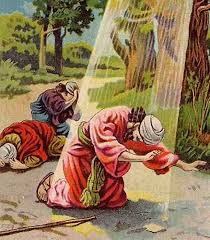 But the Lord said to Ananias, “Go! This man is my chosen instrument to proclaim my name to the Gentiles and their kings and to the people of Israel. I will show him how much he must suffer for my name.”
God is the initiator of Paul's conversion. He was on a path to destroy the early Church. He did not seek an appointment with Jesus. But "his grace arrested Paul". The wonderful truth is that God finds you, even if you are not seeking him. I accept that the conversion experience of Paul is extraordinary. Not everyone has such an experience. God probably brought this story in Paul's life so that the rest of his ministry is strengthened. The testimony of Ananias may also be important in this instance. Another similar conversion story comes from my own country - Sadhu Sundar Singh. Read about his conversion to Christianity here.
I have always been amazed at Ananias' ministry - Paul is probably the only convert that Ananias earned for Christ. But what a strike rate - he hit the ball out of the park, with Paul's conversion. Similarly, all of our ministry maybe for one person. And, not a big ministry which is popular. Persist.
Next, note that Paul went to Arabian wilderness - probably to meditate, pray and learn from God. We really do not know what happened during this time. But the message is clear - even Paul needed a time of preparation before he could be used by God, effectively. It is not to say that you should not start witnessing once you are a christian. It's just a testament to the fact that new christians should not be elevated to leadership positions too early.
Acts 9: 26-27: When he came to Jerusalem, he tried to join the disciples, but they were all afraid of him, not believing that he really was a disciple. But Barnabas took him and brought him to the apostles. Another person like Ananias is Barnabas. Watch how he disciples Paul. Would you like to be a Barnabas or an Ananias? I would.
The passages in Galatians and Philippians are powerful writings that explain the conversion story. Please read them carefully. Let me show you the best part of it here:
Philippians 3: 7-9:
Saul becomes Paul
Acts 9 is an extraordinary chapter - Saul of Tarsus becomes Paul, the apostle to the gentiles.
"God set me apart from birth" (Gal 1). - Paul was by birth a Roman citizen (allows for free movement and travel); born in Tarsus (able to understand the intellectual Hellenistic philosophy - helps communicate the gospel); born a jew of the tribe of Benjamin (credibility before the early church); instructed by Gamaliel (able to debate and bring forth complex thoughts into simple words). And then, he starts persecuting the early church (the Way). God set him apart from birth. God had a very specific plan for Paul's life. He has such a plan for YOU too. God shapes and molds you into the person He wants you to be.
Acts 9: 15-16:
God is the initiator of Paul's conversion. He was on a path to destroy the early Church. He did not seek an appointment with Jesus. But "his grace arrested Paul". The wonderful truth is that God finds you, even if you are not seeking him. I accept that the conversion experience of Paul is extraordinary. Not everyone has such an experience. God probably brought this story in Paul's life so that the rest of his ministry is strengthened. The testimony of Ananias may also be important in this instance. Another similar conversion story comes from my own country - Sadhu Sundar Singh. Read about his conversion to Christianity here.
I have always been amazed at Ananias' ministry - Paul is probably the only convert that Ananias earned for Christ. But what a strike rate - he hit the ball out of the park, with Paul's conversion. Similarly, all of our ministry maybe for one person. And, not a big ministry which is popular. Persist.
Next, note that Paul went to Arabian wilderness - probably to meditate, pray and learn from God. We really do not know what happened during this time. But the message is clear - even Paul needed a time of preparation before he could be used by God, effectively. It is not to say that you should not start witnessing once you are a christian. It's just a testament to the fact that new christians should not be elevated to leadership positions too early.
Acts 9: 26-27: When he came to Jerusalem, he tried to join the disciples, but they were all afraid of him, not believing that he really was a disciple. But Barnabas took him and brought him to the apostles. Another person like Ananias is Barnabas. Watch how he disciples Paul. Would you like to be a Barnabas or an Ananias? I would.
The passages in Galatians and Philippians are powerful writings that explain the conversion story. Please read them carefully. Let me show you the best part of it here:
Philippians 3: 7-9:
But whatever were gains to me I now consider loss for the sake of Christ. What is more, I consider everything a loss because of the surpassing worth of knowing Christ Jesus my Lord, for whose sake I have lost all things. I consider them garbage, that I may gain Christ and be found in him, not having a righteousness of my own that comes from the law, but that which is through faith in Christ—the righteousness that comes from God on the basis of faith.
What do I count as my losses? What do I count as my gains?
Am I found in Him?
Do I have the righteousness that comes from God on the basis of faith?
Acts 9:32 - 11:30
Aeneas, Tabitha, Antioch Christians
Peter is back in action in this chapter. He heals people, but it appears that as the church is formed, the frequency of miracles maybe tapering down.
God establishes the first gentile home church - the Centurion and his gentile household. The way God led Peter to this house was incredible and powerful. Without such a powerful movement of God, the Jew-Gentile barrier may not have been broken. The fact that the two miracles Peter performed happened before the conversion of Cornelius may signify something relevant. The subsequent actions of Peter were strengthened in the eyes of the Jewish Christians due to the miracles which Peter performed. There was no one anyone could tell Peter he is not acting through the Spirit.
As Peter was speaking, the gentiles received the baptism of the Holy Spirit. This pattern is not present in other circumstances. It occurred in this order likely to strengthen the case for Gentile Christians. The subsequent baptism symbolizes the forgiveness of sins. Through baptism, one confesses that Christ is the Lord of his life.
Note how the gentile church was established - Acts 10:27 - Cornelius' gathered a bunch of his friends. That's exactly how the Church grows - through expanded influence.
Also note how Barnabas again does a most important task - finding Paul (Acts 11:25). What a great disciple!
Acts 12
Peter escapes the prison
Acts 12 is the final chapter before which Paul takes up the big space in early church history. But before that, let's talk about Herod. There are 4 Herod's mentioned in the bible - Herod the great (the infant killer), Herod antipas (killed Jesus), Herod Agrippa (grew up in Rome and was a friend of Caligula - brutal emperor), and finally Herod Agrippa II (Acts 25-26). The story of Herod Agrippa's pathetic death is also described in historical texts.
Apostle James is the first apostle to be martyred. John dies last - of old age. Around the same time as James was martyred, Peter was spared the death through this great prison escape. Does it mean James was a sinner? And Peter was more favored by God? Or was it because the church may have prayed harder for Peter? The answer lies in our understanding of the providence of God. God's ways are something we just cannot understand or comprehend.
If you notice Peter's escape and the after-events, Rhoda the servant girl is being mentioned. She was told by the praying believers that she is crazy. The believers were praying for a miracle and it happens, but they refuse to believe it. Does this happen to us often?
Note that this portion talks about a 'guardian angel'. Does it mean that for every believer there exists a guardian angel? This is why it is so important to read the bible in a historical context and obtain doctrines if certain passages are corroborated in several other portions in the bible. The Jews of that age considered that there were guardian angels for every person. But the bible (in Hebrews 1:14 and Mathew 18:10) does not say that each one of us has a specific angel. It does mention that angels guard us.
Mathew 18:10: "See that you do not despise one of these little ones. For I tell you that their angels in heaven always see the face of my Father in heaven.
Peter escapes the prison
Acts 12 is the final chapter before which Paul takes up the big space in early church history. But before that, let's talk about Herod. There are 4 Herod's mentioned in the bible - Herod the great (the infant killer), Herod antipas (killed Jesus), Herod Agrippa (grew up in Rome and was a friend of Caligula - brutal emperor), and finally Herod Agrippa II (Acts 25-26). The story of Herod Agrippa's pathetic death is also described in historical texts.
Apostle James is the first apostle to be martyred. John dies last - of old age. Around the same time as James was martyred, Peter was spared the death through this great prison escape. Does it mean James was a sinner? And Peter was more favored by God? Or was it because the church may have prayed harder for Peter? The answer lies in our understanding of the providence of God. God's ways are something we just cannot understand or comprehend.
If you notice Peter's escape and the after-events, Rhoda the servant girl is being mentioned. She was told by the praying believers that she is crazy. The believers were praying for a miracle and it happens, but they refuse to believe it. Does this happen to us often?
Note that this portion talks about a 'guardian angel'. Does it mean that for every believer there exists a guardian angel? This is why it is so important to read the bible in a historical context and obtain doctrines if certain passages are corroborated in several other portions in the bible. The Jews of that age considered that there were guardian angels for every person. But the bible (in Hebrews 1:14 and Mathew 18:10) does not say that each one of us has a specific angel. It does mention that angels guard us.
Mathew 18:10: "See that you do not despise one of these little ones. For I tell you that their angels in heaven always see the face of my Father in heaven.
James' martyrdom was in AD 44. This is the time the center of the church shifts from Jerusalem to Antioch.
James 1-2
A letter to the early Jewish Christians
James is the brother of Jesus, commonly referred as James the just. He emphasizes justice to the poor and needy, and practical Christianity in his book. James' epistle is the oldest book in the New testament. We can date it to AD 45-50. The book refers to the time of the early church seen in Acts 8-12. Much of what is written is therefore addressed to the early Jewish Christians. One can note that the sins mentioned in the epistle of James are more subtle than the ones mentioned by Paul in his epistles (sexual sins for instance). Another interesting observation is how James refers to Jesus in the introduction (as his master and Lord, despite being his brother).
James talks about faith in action - faith without works is useless. Is James 2:21 contradicting what Paul writes in Hebrews 12 that Abraham received what he did due to his faith? Actually, both are agreeing in that true faith naturally shows up in good action. This way one can help define true faith. James 2:10 also helps convict us that one sin is enough, small or big, for us to fall short of God's expectations. This will always convict us of our self-righteousness. Of note, James was martyred in AD 62.
A letter to the early Jewish Christians
James is the brother of Jesus, commonly referred as James the just. He emphasizes justice to the poor and needy, and practical Christianity in his book. James' epistle is the oldest book in the New testament. We can date it to AD 45-50. The book refers to the time of the early church seen in Acts 8-12. Much of what is written is therefore addressed to the early Jewish Christians. One can note that the sins mentioned in the epistle of James are more subtle than the ones mentioned by Paul in his epistles (sexual sins for instance). Another interesting observation is how James refers to Jesus in the introduction (as his master and Lord, despite being his brother).
James talks about faith in action - faith without works is useless. Is James 2:21 contradicting what Paul writes in Hebrews 12 that Abraham received what he did due to his faith? Actually, both are agreeing in that true faith naturally shows up in good action. This way one can help define true faith. James 2:10 also helps convict us that one sin is enough, small or big, for us to fall short of God's expectations. This will always convict us of our self-righteousness. Of note, James was martyred in AD 62.

No comments:
Post a Comment